





















Law firm efficiency has never mattered more. Between administrative tasks eating into billable hours, evolving client expectations, and rapid technology changes, staying competitive requires more than just working harder—it requires working smarter.
In a recent Ask the Experts session hosted by Stamps.com in partnership with the American Bar Association, two industry leaders shared actionable insights on the biggest challenges facing legal professionals today. Ruby L. Powers, a board-certified attorney and legal tech expert, and Jocelyn Johnson, Chief Marketing Officer of the ABA and Six Sigma Master Black Belt, tackled questions submitted by legal professionals about time management, automation, and preparing for what’s ahead in 2026.
Here’s what they had to say.
When asked to identify the biggest financial drain facing law firms, Johnson pointed to something many leaders overlook: task switching.
The biggest drain isn’t necessarily what most leaders think it is. It’s more around the task-switching loss.
Jocelyn Johnson, CMO, American Bar Association
“Every time a lawyer moves between billable work and administrative tasks, they might lose six to eight minutes of focus and productivity. For a typical attorney handling 15 to 20 of those switches a day, that’s about two hours of lost productivity every day.”
Two hours daily adds up to more than 500 hours annually—time that could translate to significant revenue if captured properly.
Powers agreed, referencing Cal Newport’s book ‘Deep Work’ to explain why this matters so much.
“A human can probably only do about four hours a day of true focus time, and that’s after building up to it,” she said. “The more we go from one thing to the next, it’s switch-tasking, not really multitasking. The residue from moving from one thing to the next slows us down.”
Johnson noted that firms implementing time capture automation are seeing measurable results.
“The data we’ve collected shows they’re capturing anywhere from 15 to 20% more billable time, simply by eliminating ‘what did I do today?’ reconstruction exercises.”
Beyond task switching, Powers identified email and document drafting as key areas where attorneys lose valuable time.
“Where do you spend a lot of your time? It’s email,” she said. “So is your email connected to your case management software? Are you using some type of drafting tool?”
Her recommendation extends to evaluating your entire tech stack in conjunction with your standard operating procedures.
Some of your procedures are based on what your tech is, and your tech affects your standard operating procedures. If you look at them in a silo, you’re going to make a mistake.
Ruby Powers, Board-Certified Attorney, Legal Tech Expert
Automation does more than save time—it can significantly reduce workplace stress. For firms looking to automate, Jocelyn recommended starting with tracking.
“From a Six Sigma perspective, the tracking of your practice management is a great way to get back some of that, and you can quickly get the ROI on it,” she said.
She also addressed concerns about time tracking tools feeling like surveillance.
“It’s not necessarily about surveillance—it’s about memory assistance, and that’s how we need to kind of change our mindset when it comes to those types of tools.”
Critical deadlines leave no room for error in legal practice. Powers emphasized the importance of building reliable systems with redundancies.
“Choose a good case management software to put your deadlines in, and put in your deadlines when they come in,” she said. “Have a backup program for your deadlines—or a program to double-check whoever is responsible—have a backup or a fail-safe to make sure that those deadlines are put in.”
She added that trusting your systems is essential for peace of mind.
“If you don’t have a good system that you trust, you’re going to waste a lot of unnecessary energy,” Powers said.
For managing Certified Mail, the panel discussed the value of centralized digital platforms.
“It’s very easy to not go in person to mail or ship things and to track all of those things from centralized dashboards,” Andi Narvaez noted. “Make sure that when you send Certified Mail, you’re getting that return receipt back, whether it’s electronic or whether you still need that physical label or form.”
When asked what tools law firms are using, Johnson offered a simple endorsement: “Stamps.com, of course.”
For managing aggressive client expectations, Powers emphasized that boundary-setting starts with self-care.
“Don’t be in a space of burnout. What I’ve noticed about myself is the more I get into that danger zone, the worse decisions I’ll make—my boundary levels will go down,” she said.
She recommended establishing clear operating procedures upfront.
“If you want us to file something in less than two weeks, well, there’s going to be a rush fee. Just live with it,” she said. “We’re only going to handle so many rush cases at a time because that’s all we can handle.”
Powers recommended first looking for savings in existing systems.
“You might be able to find $5,000 just by evaluating your tech stack,” she said. “What we’ve been doing the last few years is really just honing in on our systems and trying to be as efficient as possible. We’re not really adding a lot of new team members until we clean up our systems.”
Johnson took a more structured approach, breaking down exactly how she’d allocate the budget: “$2,000 toward practice management software with integrated calendaring and document management, $1,500 toward automated time tracking and billing, $1,000 toward document automation for the three most common documents that you use, and the last $500 toward staff training and change management.”
Looking ahead, both experts identified several shifts that will reshape legal practice.
Powers shared a striking example of how quickly attitudes have shifted.
“I was at a conference recently, and one of the attorneys said, ‘Two years ago, we were told by our clients: don’t you dare touch AI. And now they’re saying: you better be using AI.’ That switch—that extreme change—is in just two years.”
Johnson predicted that clients will increasingly expect AI-driven efficiencies reflected in lower costs or faster turnaround for services.
“They’re still happening today despite the pandemic being over,” Johnson noted, “and infrastructure for remote hearings and electronic filings will be part of the expectations, not accommodations.”
As breaches continue to make headlines, security certifications are becoming client-required for engagement. Firms that can demonstrate strong security practices will have a competitive advantage.
“Clients increasingly will demand flat fees or success-based pricing,” Johnson said. “Firms that can accurately scope work through data analytics will win.”
Doing business as usual is out the window. If you’re doing that, then you’re not going to be in business very long.
Ruby Powers, Board-Certified Attorney, Legal Tech Expert
The insights from Johnson and Powers point to a clear theme: law firm efficiency in 2026 hinges on strategically eliminating time-wasting tasks and embracing tools that enable you to focus on what matters—serving clients.
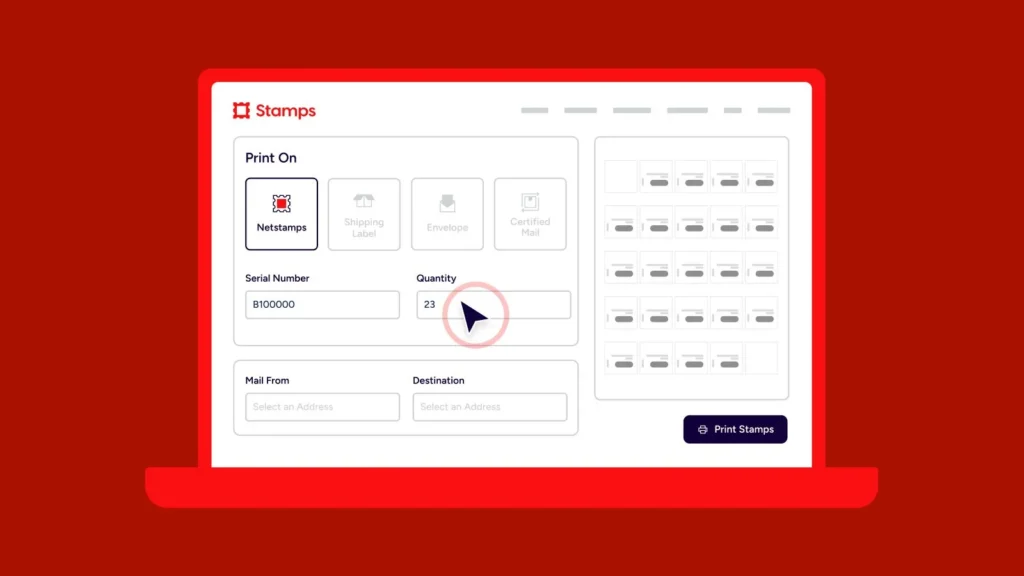
Mailing and shipping is one area where small changes can yield significant time savings. Instead of making trips to handle certified mail and postage, firms can print everything directly from their desks, track deliveries in real time, and maintain the documentation they need for compliance.
If you’re a member of the American Bar Association or another professional service association, you can try Stamps.com free for two months. It’s one small step toward getting those two hours back in your day.