





















The questions didn’t stop when the webinar ended. During Ask the Experts: What’s Disrupting Law Firms in 2026, our session with the American Bar Association, Ruby L. Powers fielded more from legal professionals than we could fit into one session. Here’s everything we didn’t get to.

Powers is a board-certified immigration attorney, law practice management consultant, professor, author, and business coach. She runs Powers Law Group and Powers Strategy Group, and is the author and host of the Power Up Your Practice book and podcast. As one of the most practical voices in legal tech today, she’s a familiar name to many in the legal profession. If you missed the live session—or want to revisit the highlights—check out our full recap.
Below, Powers answers every question we didn’t get to during the event, organized by topic.
The right AI tools for your firm depend on where you’re experiencing friction. If you’re wasting time on unqualified leads, start to automate intake with Calendly + Zapier. If drafting is slowing you down, use Visa Law AI and ChatGPT to handle structure and first drafts so you can focus on strategy, also some case management systems have their own drafting AI tools. If communication is overwhelming, tools like AI Zoom, Gemini, and Otter.ai streamline emails and meeting follow-ups. For automation and reducing burnout, Zapier acts as your “invisible associate,” while NotebookLM helps analyze complex case files quickly. The key is to identify bottlenecks first, then implement AI where it saves time, improves client experience, and protects high-value legal work.
Transparency builds trust, we include language in our engagement agreements stating we may use secure AI tools to assist with drafting, research, and administrative efficiency — always under attorney supervision.
Key principles:
The risks are:
Guardrails:
These alone can reduce burnout significantly.
We normalize it. We don’t say, “Don’t use AI.” We say, “Use it responsibly.”
We:
How can AI be used for secretarial work?
AI is accelerating work, and that inevitably affects billing models. When drafting that once took five hours now takes one, the traditional billable hour model becomes strained. Many firms are moving toward flat-fee or hybrid pricing structures because AI creates predictability and efficiency. Ultimately, clients are paying for strategic expertise and outcomes, not for the time it takes to type a document. AI highlights the difference between time and value.
Yes, but not in the dramatic “lawyers will disappear” way people imagine. AI is disrupting the execution layer of legal work — drafting, summarizing, research, administrative processing. What it is not replacing is judgment, strategy, client counseling, negotiation, and leadership. The lawyers who will feel disrupted are the ones whose value is tied only to producing documents. The lawyers who will thrive are those who elevate into advisors, problem-solvers, and strategic thinkers. AI changes how we work, not why we are needed.
I believe we will hire differently. Technical fluency will matter more. Associates who understand how to use AI tools responsibly, who can supervise outputs, improve workflows, and think systemically will be far more valuable than those who simply draft quickly. Firms will look for associates who can combine legal reasoning with technological adaptability.
The best way to stay relevant is to become AI-literate. Paralegals should learn how to use drafting tools, workflow automation platforms, intake systems, and AI-powered research assistants. Instead of being the person manually entering data, become the person who oversees and improves the system. The roles that disappear are repetitive ones. The roles that grow are operational and supervisory. AI should feel like leverage, not a threat, if you decide to master it early.
ALSPs are built on systems, technology, and scalability. They are often faster and more cost-efficient because they are structured differently. The impact on traditional firms is pressure to modernize, specialize, and operate more efficiently. Small firms can compete successfully if they lean into niche expertise, client relationships, and automation rather than trying to mimic large firm structures.
It is not one tool or one competitor. It is resistance to change. Firms that rely solely on referrals, outdated systems, and manual processes are the most vulnerable. Clients today expect responsiveness, transparency, and speed. Technology has raised the baseline. The biggest disruptor is complacency.
Marketing is no longer just about networking events and word of mouth. It is digital, data-driven, and automated. Firms are using AI-assisted content tools, CRM systems, email automation, and analytics to understand client behavior and nurture relationships consistently. The advantage small firms have is authenticity. When you combine authentic messaging with smart systems, you can compete with much larger firms without a massive marketing budget.
Yes, and we are already seeing it. E-filing, remote hearings, digital signatures, and online portals are becoming standard. While physical mailing will not disappear overnight, the trajectory is clearly digital. Firms that build workflows around electronic systems will be more efficient and better positioned long term.
The office must offer something meaningful. If employees feel they are coming in just to sit on Zoom in a different location, they will resist. Create intentional collaboration days, training sessions, strategic planning workshops, or team-building events that truly benefit from in-person interaction. When the office becomes a place of connection and development, rather than surveillance, attendance improves naturally.
Remote teams require clarity. Clear KPIs, structured weekly meetings, shared dashboards, and defined expectations are essential. Remote work fails when leadership assumes visibility equals productivity. Instead, measure outcomes, not hours. Communication, accountability, and documentation become even more important in a distributed environment.
Billable hours measure time, not contribution. Consider evaluating client satisfaction, turnaround time, initiative in improving processes, teamwork, leadership development, and revenue contribution. Associates who improve systems or help mentor others add long-term value that billables alone cannot capture. A balanced scorecard approach protects the bottom line while encouraging growth.
It can be incredibly empowering if structured intentionally. The good is flexibility and autonomy. The bad is isolation and inconsistent revenue. The ugly appears when there are no systems in place and the practice becomes reactive and overwhelming. A solo or part-time practice must be designed carefully, with boundaries, automation, and clear financial planning.
You must schedule outreach as intentionally as client work. Networking cannot be random or sporadic. Use a CRM to track contacts and follow-ups. Block time on your calendar monthly for relationship building. Even in a four-person firm, outreach should be systemized, not left to chance.
New associates should become comfortable with AI drafting tools, document automation platforms, CRM systems, and meeting transcription tools. Learning how to use platforms that improve efficiency early in their careers builds long-term confidence. Technical fluency should be part of professional development, not an afterthought.
Use a case management system with automated reminders, maintain a shared firm calendar, and conduct weekly deadline reviews. Technology helps, but discipline prevents malpractice. A system with multiple checkpoints is far safer than relying on one person’s memory.
The best calendar is one that integrates with your email, case management system, and mobile device seamlessly. Whether it is Outlook or Google Calendar, consistency and integration matter more than brand preference. Many CRMs also have their own calendars, allowing everything to be centralized in one place. One centralized system reduces risk significantly.
For most filings, USPS Priority Mail with tracking provides a strong balance of cost and reliability. For urgent submissions, the best carrier may depend on the filing address, since some locations such as PO Boxes may limit which delivery services can be used. The key is standardizing your internal mailing procedure, keeping digital copies, and documenting tracking numbers carefully.
Using USPS services such as “Address Service Requested” can help obtain updated forwarding information. At the same time, document all attempts to reach the client to demonstrate diligence and compliance with ethical obligations.
Choose events aligned with your growth goals. National conferences like AILA, ABA TECHSHOW, or ClioCon provide exposure to innovation and leadership trends. Regional conferences often provide deeper relationship-building opportunities. The most important factor is intentionality; attend events where your ideal peers and referral sources will be, and follow up consistently afterward.
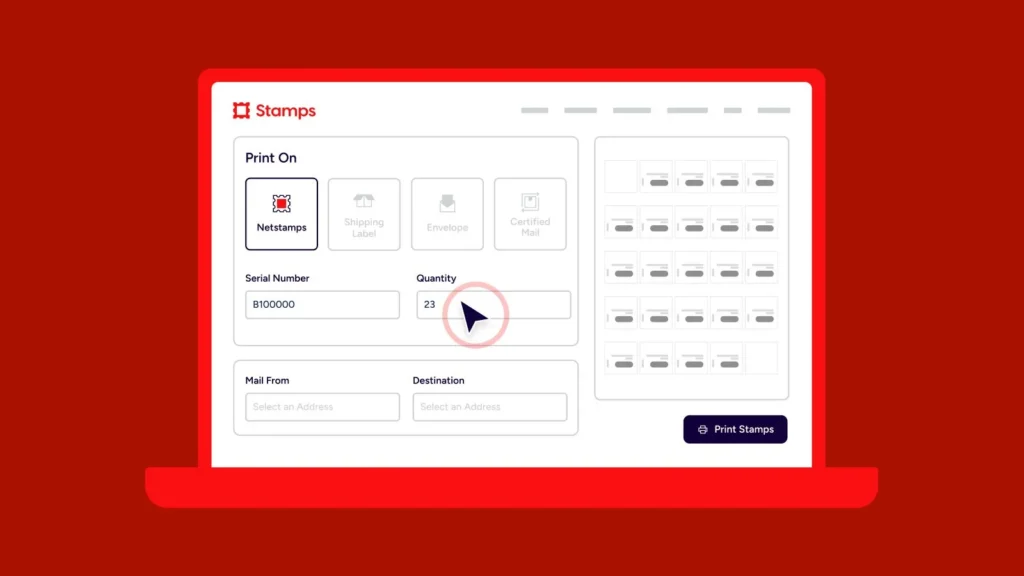
Want more from Powers? Watch the full Ask the Experts session on demand. And if you’re ready to take one more task off your plate, see how Stamps.com helps law firms manage Certified Mail, track deliveries, and print postage without leaving the office.