





















There’s a phrase that kills more small business efficiency than any market downturn or staffing shortage: “It works fine.”
It works fine. We’ve always done it this way. No one’s complained. The stack of workarounds, manual steps, and inherited habits that make up daily operations gets a pass because nothing has visibly broken—yet. But “good enough” has a way of becoming expensive before it becomes obvious, and by the time most businesses feel the pain, they’ve already spent months absorbing costs they didn’t know to measure.
For professional services businesses—law firms, accounting practices, real estate agencies, healthcare offices—the stakes are particularly high. Your work is time-sensitive, compliance-dependent, and deeply relationship-driven. Every hour your team spends navigating outdated business systems is an hour they’re not spending on clients.
Here’s a number worth sitting with: manual processes cost companies between 20% and 30% of revenue annually, according to research compiled by ProspectSoft. That’s not a rounding error. For a firm generating $500,000 a year, that’s potentially $100,000 to $150,000 in lost productivity, avoidable errors, and inefficiencies that never show up as a line item—they just quietly drain the bottom line.
The mechanism isn’t dramatic. It’s a stack of small frictions: staff members spending two or more hours each day on repetitive tasks (Formstack and Mantis Research put that figure at over half of all employees), documents that require manual handling at every step, postage that gets calculated by hand and often wrong, tracking information that lives in someone’s inbox instead of a shared dashboard.
None of these feel like crises. Together, they add up to an organization that runs slower, costs more, and creates more opportunity for human error than it needs to.
The tricky thing about operational inefficiency is that it camouflages itself as normal. When everyone on the team follows the same manual workflow, no one questions whether there’s a better way—because there’s no contrast.
Take mailing and document delivery, one of the most time-consuming and under-optimized workflows in professional services. Consider what’s often involved: calculating postage manually, running to a carrier location, tracking Certified Mail through handwritten logs, and following up with clients about documents they may or may not have received. Every one of those steps introduces lag, and lag in a deadline-driven business has a real cost.
This is especially true when teams operate across multiple locations. As we explored in our piece on what breaks first when your business scales, growth has a way of exposing process weaknesses that were invisible when the business was smaller. What’s manageable at one location becomes chaotic at three.
Outdated business systems don’t stay static. They compound. As teams grow, the volume of manual tasks grows with them—but the efficiency doesn’t. A process that costs one employee two hours a week costs five employees 10 hours a week. You hire more people to handle the load, which increases overhead, which puts more pressure on margins. The business scales, but so does the inefficiency.
There’s also the hidden cost of errors. Manual data entry, hand-calculated postage, unverified addresses—these create mistakes that take time to fix and sometimes cost money directly. Address verification alone can prevent significant waste; returned mail, resent documents, and missed deadlines carry real financial consequences, particularly in legal and accounting contexts where a delayed document can mean a compliance failure.
Research from Vena Solutions found 93% of IT professionals report higher productivity after implementing automation tools, largely because they’re spending less time correcting preventable mistakes.
Modernizing your systems doesn’t require overhauling everything at once or investing in technology your team isn’t ready to use. It means identifying where manual friction is highest and starting there.
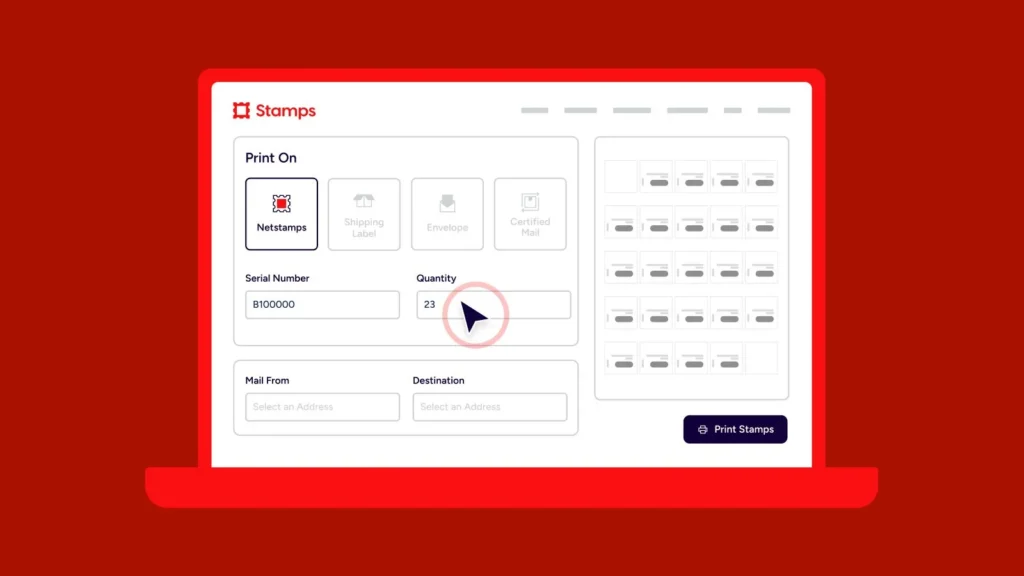
For most professional services firms, mailing and document delivery is a natural first target. Streamlining office mail can recover meaningful hours each week without requiring a company-wide transformation. Tools like Stamps.com let firms print postage directly from their desk, access discounted rates across major carriers, and verify addresses automatically before anything goes out the door. Certified Mail tracking becomes a searchable record rather than a phone call to confirm. Batch printing handles volume without bottlenecks.
The broader principle applies everywhere. When you remove manual steps from a high-frequency workflow, you don’t just save time—you create reliability. Processes run consistently rather than depending on whoever happens to be available that day.
The “good enough” mindset is appealing because change feels risky and the current system, however imperfect, is known. But the math doesn’t favor patience. Every month spent navigating outdated business systems is a month of lost productivity, preventable errors, and a widening gap between how your firm operates and how your most efficient competitors do.
The firms winning in 2026 aren’t necessarily the ones with the most sophisticated technology. They’re the ones that stopped tolerating friction they didn’t have to tolerate. They automated their repetitive work—starting with high-frequency, low-complexity tasks like mailing—and reinvested that time into the work that actually requires human judgment.
Good enough got them here. Better is what gets them where they’re going.
Ready to see what your firm could reclaim? Find out how much time you could get back with the Stamps.com time savings calculator.