


















Every eviction notice you send is a legal document. Every lease renewal you mail is a binding communication. And every time someone on your team drives to the post office to handle it, you’re absorbing time—and liability—that doesn’t show up anywhere on your books.
Property managers depend on physical mail more than almost any other small business. And the stakes of getting it wrong are unusually high.
When mailing fails, the consequences don’t wait
Eviction notices, lease terminations, rent increase letters, notice-to-quit filings—these aren’t routine correspondence. In most states, they’re legally mandated documents that must be sent via Certified Mail® to be enforceable. Miss the process, and you don’t just lose time. You lose standing in court and potentially restart a weeks-long legal process from scratch.
That’s a different kind of pressure than most small business owners face. A delayed package is a bad day. A failed eviction notice is a legal reset button.
And yet most property management firms still handle this the same way they always have: print it, stuff it, drive to the post office, wait in line, request the certified receipt, bring it back, file it. For one property, it’s manageable. For a portfolio of 10, 20, or 30 units, that workflow quietly eats hours you don’t have.
Property managers spend approximately 47.5 hours per year per property on leasing and management tasks alone. A significant portion of that is administrative—paperwork, documentation, coordination—that pulls focus away from the work that actually generates revenue.
Mail runs sit inside that number, untracked and unexamined. They look like “just something we do.” But when you add up the time spent printing, driving, waiting, and filing—plus retail Certified Mail fees on top of first-class postage—the actual expense is higher than most firms realize.
For property managers overseeing multiple locations, the problem compounds. Each office develops its own habits, its own postal accounts, its own filing systems. There’s no centralized view of what went out, when, or to whom—until someone needs that proof and it isn’t there. If you’re in that position, this look at what breaks first when businesses scale is worth reading before your next growth push.
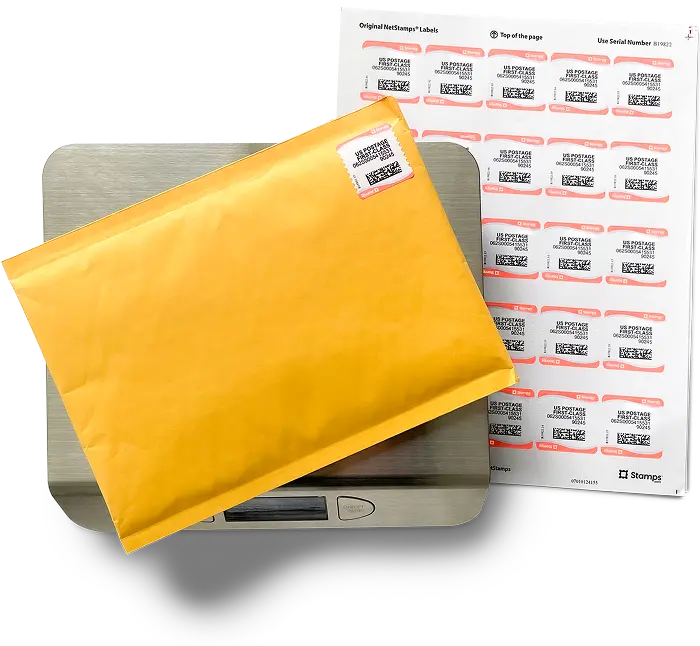
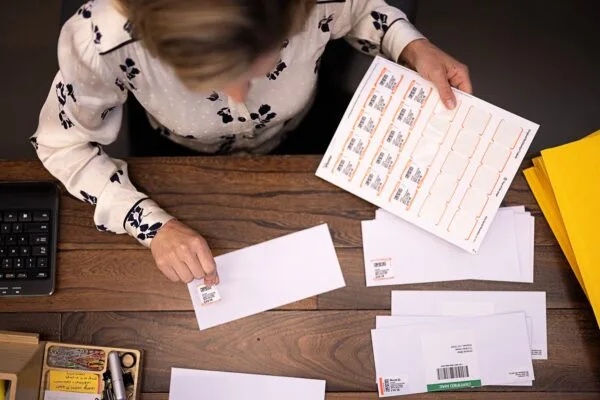
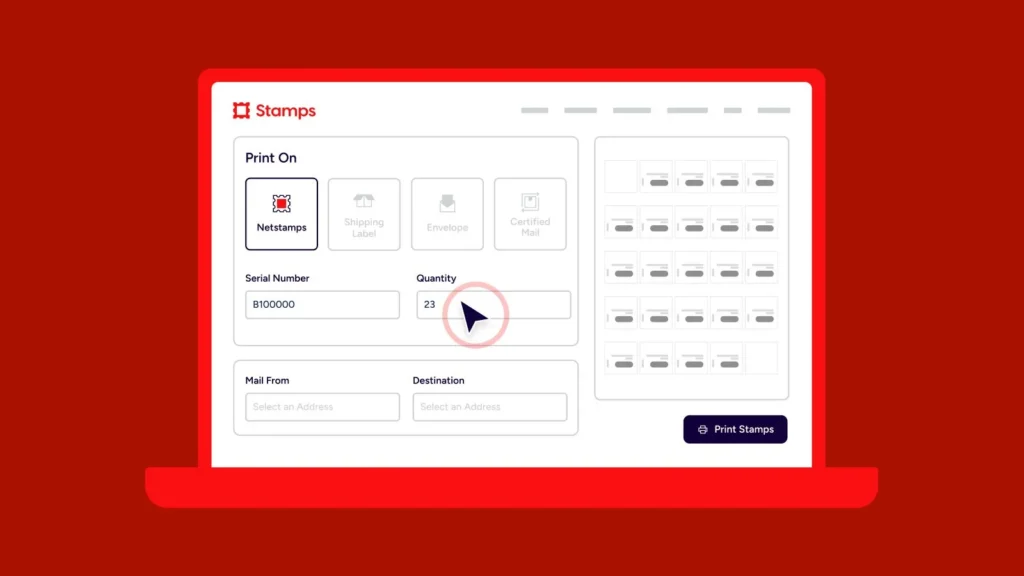
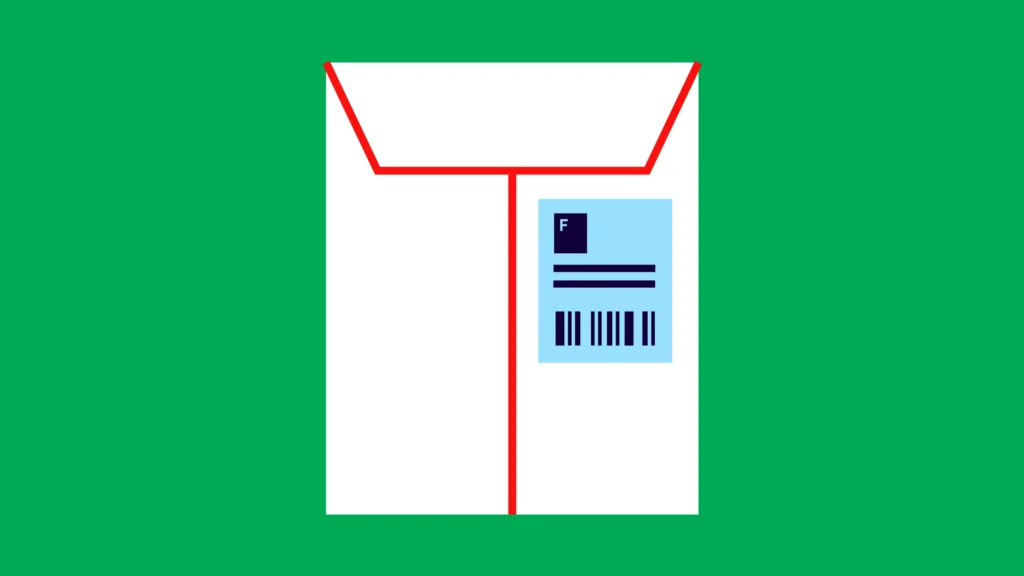
The shift is simpler than most property managers expect. With Stamps.com, your team can print Certified Mail directly from a desk—label, form, and all—without a post office run. Electronic return receipts land in your account, searchable and stored, so proof of delivery is always a click away. Scheduled carrier pickups mean outgoing mail leaves your office without anyone leaving.
Jim Mahoney has managed four rental properties in California and Arizona for over 40 years, and has used Stamps.com for more than two decades. Certified Mail is central to how he handles eviction notices. He prints the label from his desk, fills out the certified slip, and the notice goes out with the rest of his mail.
As soon as it became possible to print my own postage…are you kidding me? I was in.
For Mahoney, the record is as valuable as the convenience. When a tenant dispute escalates, proof that a 30-day notice was sent and delivered on time keeps him covered.
Cost codes let you allocate postage by property or client—a practical feature when you’re managing multiple units and need to track expenses accurately or pass costs back to owners. And discounted USPS and UPS rates mean you’re not paying retail on every piece you send.
Property managers know the mailing happened. The court needs proof. Those aren’t the same thing.
Certified Mail with electronic delivery confirmation creates a timestamped record that the document entered the postal system and was delivered. That record matters when a tenant disputes receipt of a notice, when a filing requires proof of service, or when a dispute ends up in front of a judge six months later.
Mailing time-sensitive documents with confidence isn’t just about speed. It’s about having an auditable trail behind every piece you send—so the process holds up when it needs to.
If your firm has been operating on good faith—assuming the post office receipt is enough, assuming no one will challenge a notice—it’s worth revisiting what “good enough” actually costs. In property management, the margin for error is thinner than it looks.
Managing properties is already a multi-front operation: tenants, vendors, maintenance, compliance, and finances. The list doesn’t stop. Mailing shouldn’t be a task that requires planning, coordination, or a midday errand.
When your mailing process runs from your desk—with certified tracking built in and receipts filed automatically—it becomes one less thing that can go wrong. That’s the goal: not optimizing a chore, but removing it from the list of things that can come back to haunt you.
Modernizing your mailing process doesn’t just cut time—it raises your operational standard. You’ll know exactly what was sent, when it was sent, and who sent it. That visibility is protection. And in property management, protection is the point.
Find the plan that’s right for you. Get started with Stamps.com today.