

















State governments across the U.S. are updating their Certified Mail® requirements at an unprecedented pace, with major changes taking effect in Washington, Minnesota, and Maine just this year. These updates impact everything from eviction notices to medical debt collection, creating new compliance challenges for businesses that rely on Certified Mail for legal notifications.
Whether you’re a property manager, healthcare provider, debt collector, or attorney, keeping up with these changing rules is crucial to stay compliant and avoid expensive legal problems.
Certified Mail is a premium USPS® service that provides proof of mailing and delivery for important documents. When you send Certified Mail through USPS, you receive:
Under federal regulations, Certified Mail must meet specific standards:
The base Certified Mail fee is $5.30 as of October 2025, with additional charges for return receipts and restricted delivery options. Understanding Certified Mail costs helps businesses budget effectively for legal compliance mailings. You can save significantly on these costs by using online postage services that offer USPS discounts.
Legal professionals, healthcare providers, property managers, and financial institutions rely on Certified Mail because it provides court-admissible evidence that critical notices were properly sent and received. This documentation proves essential in:

Washington’s House Bill 1003 introduced the most significant changes to eviction notice requirements in recent years. The new law mandates that landlords must use USPS Certified Mail when serving termination notices if personal service isn’t possible.
Enhanced mailing requirements:
Compliance impact: Property managers and landlords must now update their notice templates, plan for longer timelines, and ensure all Certified Mail is sent from within Washington state. Notices not sent by Certified Mail, or not mailed from within Washington, may be invalid.
Minnesota’s Debt Fairness Act (Senate Bill 4097) introduced new Certified Mail requirements for debt collection, particularly around “coerced debt” and bail bond situations.
Coerced debt notifications:
Bail bond collateral:
Maine’s LD 2115 (Chapter 663 of 2024) requires debt collectors to use Certified Mail when notifying low-income consumers before pursuing litigation for medical debt.
Pre-litigation requirements:

Law firms must adapt to varying state requirements while managing:
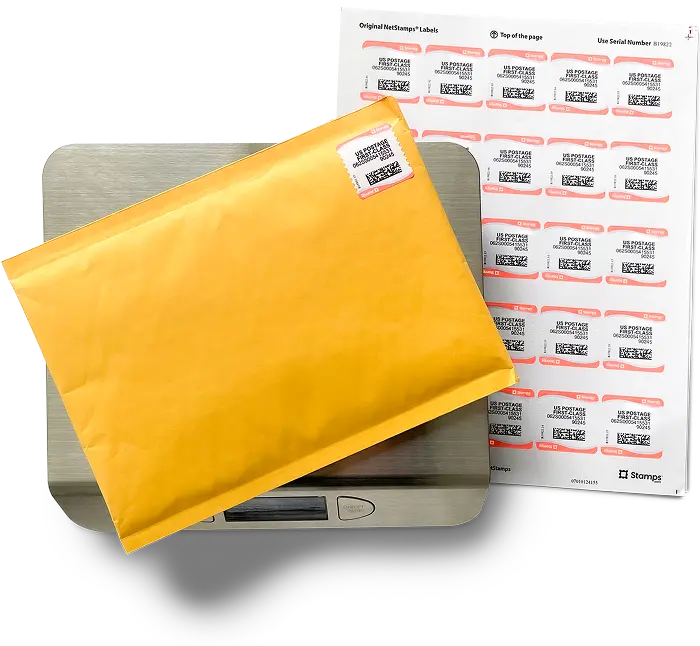
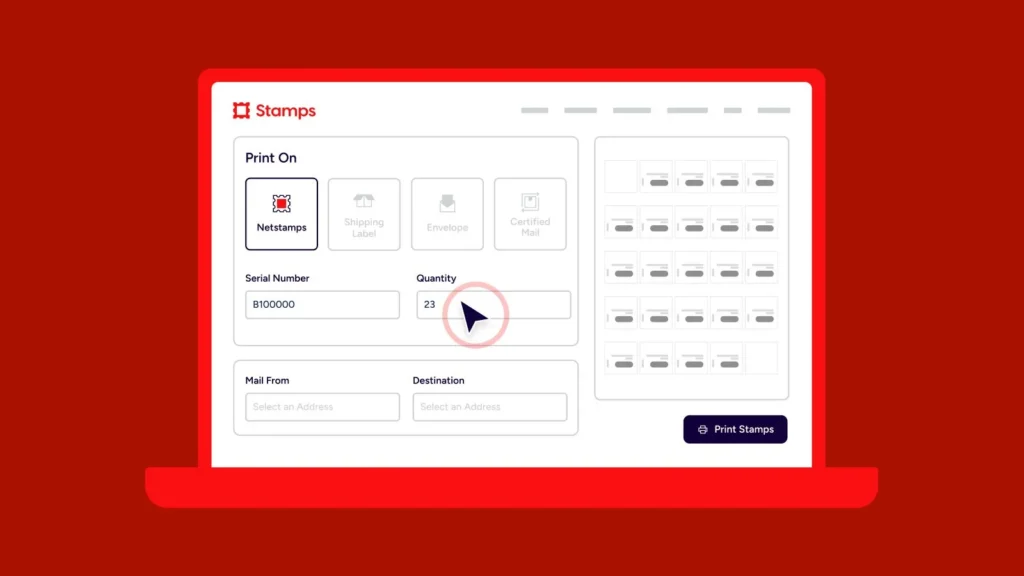
With services like Stamps.com, legal professionals can streamline Certified Mail processes while maintaining compliance across multiple states. The platform’s capabilities allow firms to print forms in under two minutes, request Electronic Return Receipts, and track everything they send in a single unified platform.
Property managers face the most immediate impact from Washington’s changes, but should also monitor:
Stamps.com’s billing codes feature helps property managers allocate postage expenses to specific properties or landlords, while automated tracking ensures all legal notices are properly documented.
Medical providers and collection agencies must navigate:
The platform’s Certified Mail capabilities provide the delivery confirmation and signature proof required under these new state regulations.
Print discounted Certified Mail forms in under 2 minutes with Stamps.com. Get started today.
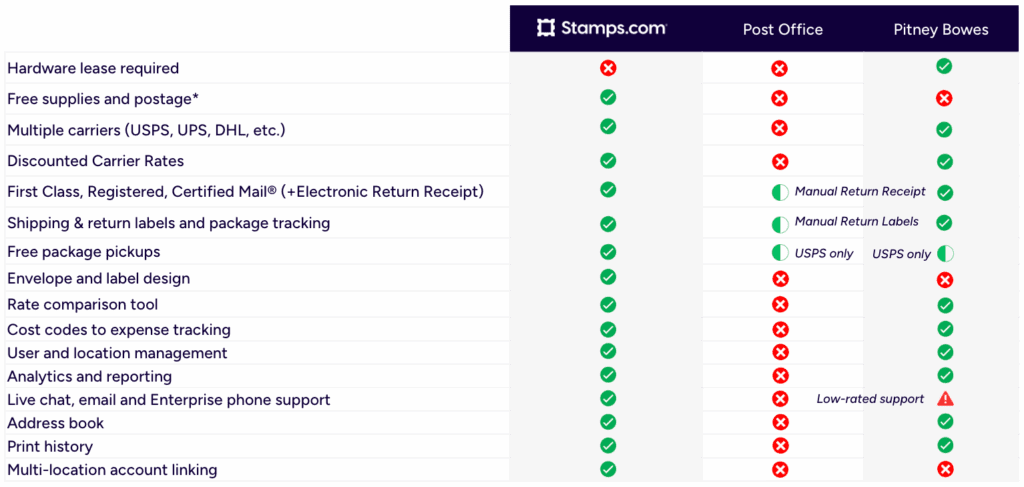
Modern businesses are moving toward automated Certified Mail solutions. Stamps.com offers:
Time-saving features:
Cost-saving benefits:
Compliance support:
Create state-specific workflows: Develop separate processes for states with unique requirements, such as Washington’s in-state postmark rule or Maine’s income verification procedures.
Maintain detailed records: Keep comprehensive documentation of all Certified Mail, including:
Stay updated on changes: Subscribe to legal updates and monitor state legislature websites for pending Certified Mail requirement changes.
Test your processes: Regularly audit your Certified Mail procedures to ensure compliance with the latest state requirements.
Several states may consider similar reforms to their Certified Mail requirements:
While Certified Mail requirements remain primarily state-regulated, federal agencies continue to evaluate:
The Certified Mail industry is evolving toward:
Ready to upgrade your Certified Mail processes and ensure compliance with evolving state requirements? Start a 30-day risk-free trial of Stamps.com to access discounts, automated tracking, and comprehensive management tools designed for modern businesses.
Q: What is Certified Mail, and how is it different from regular mail?
A: Certified Mail is a USPS service that provides proof of mailing and delivery confirmation with tracking, while regular mail offers no delivery verification. USPS Certified Mail costs an additional $5.30 plus postage as of October 2025.
Q: How long does Certified Mail take to deliver?
A: Certified Mail follows the same delivery timeframes as First-Class Mail® (1-5 business days domestically), but may take slightly longer due to the signature requirement and tracking processes.
Q: Can I send Certified Mail internationally?
A: No, USPS Certified Mail is only available for domestic shipments within the United States. For international shipments requiring proof of delivery, consider Global Express Guaranteed or Priority Mail Express International.
Q: Does Certified Mail require a signature?
A: Yes, Certified Mail requires a signature upon delivery. The recipient or an authorized agent must sign to confirm receipt, which creates the proof of delivery that makes Certified Mail legally valid for important notices and documents.
Q: What happens if the recipient refuses Certified Mail?
A: If a recipient refuses Certified Mail, it’s returned to the sender. However, the attempted delivery may still constitute proper legal notice in many jurisdictions – consult with legal counsel for specific requirements.
Q: Do I need Certified Mail for all eviction notices?
A: Requirements vary by state. Washington now requires Certified Mail for mailed eviction notices, while states like Texas allow Certified Mail as one of several acceptable delivery methods. Check your state’s specific landlord-tenant laws.
Q: How long should I keep Certified Mail receipts?
A: Retain Certified Mail documentation for at least 7 years for business purposes, though legal matters may require longer retention periods. Consult your attorney for case-specific guidance.
Q: Can electronic return receipts be used in court?
A: Yes, electronic return receipts are generally admissible as evidence of delivery, though some jurisdictions may have specific formatting or authentication requirements.
Q: Does Washington’s new law apply to existing leases?
A: Yes, HB1003 applies to all termination notices served after July 27, 2025, regardless of when the original lease was signed.
Q: How do I know if Minnesota’s coerced debt rules apply to my situation?
A: Minnesota’s Debt Fairness Act defines coerced debt as debt arising from situations where the debtor had no meaningful choice. Consult with a Minnesota attorney for specific case evaluation.
Q: What income level qualifies for Maine’s medical debt protections?
A: Maine’s law protects consumers at or below 300% of federal poverty guidelines. For 2025, this equals approximately $45,180 for a single person or $93,600 for a family of four.
Q: Can I print Certified Mail labels from my office?
A: Yes, Stamps.com allows you to print Certified Mail labels directly from your computer using a standard printer through our partnership with USPS.
Q: What’s the cost difference between the Post Office and online Certified Mail?
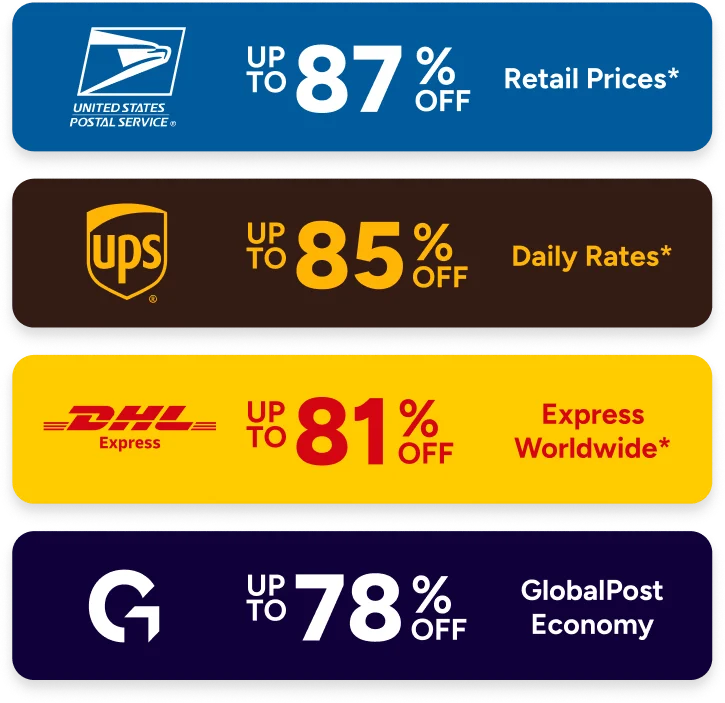
A: Through partnership with USPS, Stamps.com provides significant savings through discounted postage rates (up to 87% off USPS retail prices) plus time savings by printing postage right from your desk.
Q: How do I track multiple Certified Mail pieces efficiently?
A: Stamps.com provides a centralized tracking dashboard where you can monitor all your Certified Mail pieces in one location, with automated delivery notifications.
Q: Can I schedule Certified Mail pickup from my office?
A: Yes, you can schedule free USPS pickup for Certified Mail when using online postage services, making the entire process office-based.
Q: Should I expect more states to change their Certified Mail requirements?
A: Yes, the trend toward enhanced consumer and tenant protections suggests more states will likely update their Certified Mail requirements in the coming years.
Q: How can I stay updated on Certified Mail law changes?
A: Subscribe to legal newsletters in your industry, monitor state legislature websites, and consider working with legal counsel who specializes in your business area’s compliance requirements.
Q: Are there alternatives to Certified Mail for legal notices?
A: While some jurisdictions accept alternatives like process servers or electronic service, USPS Certified Mail remains the most cost-effective and widely accepted method for most legal notifications.