





















Law firms still rely on physical mail for critical work: certified notices, court filings, settlement packages, and client correspondence that must be provably delivered. But the old approach—mailing trips, tangled spreadsheets, and paper-based proof-of-service—quietly drains billable hours and inflates costs.
This guide shows how practical process changes and a modern digital mailing workflow let firms reduce postage costs for law firms while preserving compliance, chain-of-custody, and client trust.
Doing business as usual is out the window. If you’re doing that, then you’re not going to be in business very long.
Ruby L. Powers, Board-Certified Attorney, Legal Tech Expert
That blunt warning from a legal-tech leader explains why many firms can’t afford to treat mailing as an afterthought. The real cost isn’t only postage—it’s the time and attention that mailing steals from billable work.
Most firms treat mailing as an administrative afterthought. That mindset produces two predictable outcomes:
These problems are straightforward to fix—but only if you stop treating mail as a random admin chore and instead design predictable, auditable workflows.
ABA CMO Jocelyn Johnson called out task switching as the “biggest drain” for law firms. To make that concrete: recovering two hours per attorney per day is meaningful. For example, at a conservative $150/hour billing rate and 250 working days a year, two reclaimed hours per day equal $75,000 in billable capacity per attorney per year. Even at lower rates, recovering focus time across your team translates to tens of thousands of dollars in reclaimed billable time—and substantially reduces the friction that leads to missed deadlines and client frustration.
Here are operational changes any firm can implement this month—no heavy procurement required.
Group mail by case type or deadline. Batch printing reduces handling time and often unlocks lower negotiated postage rates. Scheduled carrier pickups eliminate time-consuming trips.
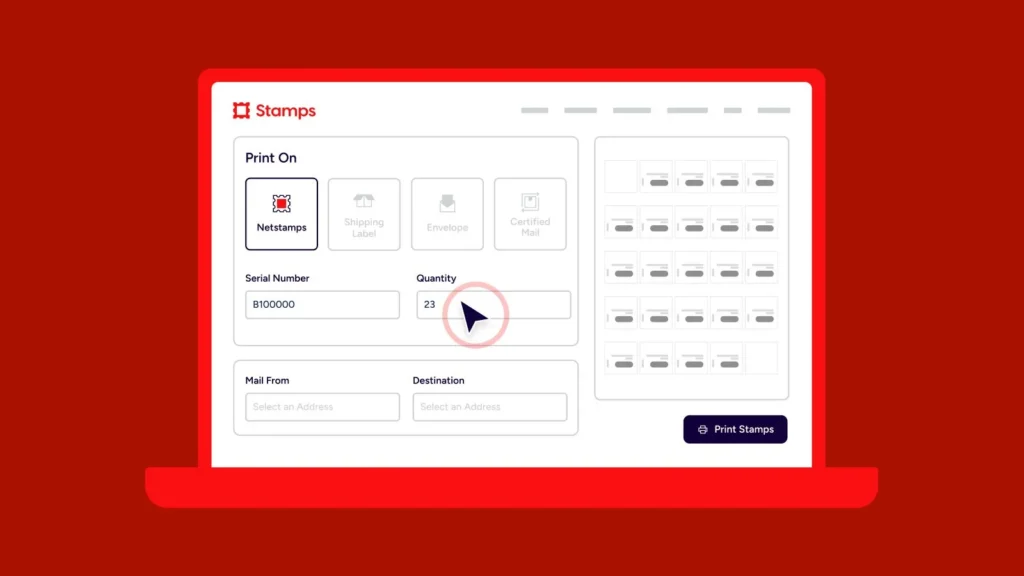
Quick step: Save templates for the most common mail types so staff can print a set of notices in minutes rather than handling each one separately.
Move to certified/registered options that provide an electronic return receipt and a searchable chain-of-custody. This removes ambiguity when deadlines and service questions arise.
Why it matters: Proof-of-service is a risk mitigator. Centralized dashboards let you “prove what was sent, when, and by whom”—a direct operational improvement the ABA panel and practitioners recommended as essential to modern practice.
Task switching is the hidden tax that drains focus. The ABA experts recommended time-capture automation and process design to recover that focus—start by measuring how long staff spend on mail tasks, then design batching and automation to remove those interruptions. As Johnson said during the webinar, “start with the metrics” and use that data to prioritize automation and change management.
When evaluating digital mailing solutions, prioritize:
Digitizing mailing doesn’t just cut costs—it raises service standards. Clients appreciate verified notice that materials were sent and delivered. Firms that remove mail-handling friction can respond faster to discovery and filing deadlines because mail handling no longer bottlenecks workflows. That combination protects revenue and reputation.