












Healthcare practices have invested heavily in protecting patient information. EHR systems, encrypted portals, HIPAA compliance training—digital safeguards are taken seriously, and for good reason. But for many practices, there’s one part of the patient communication process that hasn’t kept pace: physical mail.
Stamps.com surveyed 500 professional services workers, including healthcare professionals across medical practices, dental offices, therapy practices, and home health services, to understand how mailing fits into their workweek. What the data shows is a profession still handling sensitive documents through a process that hasn’t meaningfully changed—and the risks that come with that.
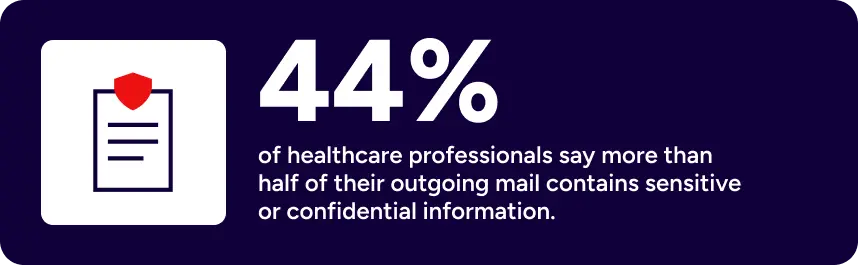
Nearly half of healthcare professionals surveyed—45%—say medical records and health information are among the documents they most frequently send by physical mail. And the volume of sensitive material moving through that process is significant: 44% say more than half of their outgoing mail contains sensitive or confidential information.
That’s not a small slice of correspondence. A significant portion of what leaves a healthcare office carries sensitive information—invoices, appointment reminders, records, routine correspondence. All of it deserves to arrive at the right place, in the right hands, with proof that it got there. That starts before the envelope is even sealed. Address verification ensures sensitive documents are going to the right recipient before they leave your desk, not after.
Not sure how your practice stacks up on admin efficiency overall? This business efficiency quiz is a good place to start.
Delivery tracking is very or extremely important to 62% of healthcare professionals surveyed—but 82% haven’t modernized their mailing process. Those two facts sitting side by side tell the real story: practices know reliable delivery matters, and most of them are still handling it the same way they always have.
It’s worth being clear about something the data confirms: physical mail isn’t disappearing from healthcare practices anytime soon. The reasons are practical, not sentimental.
Client preference and legal or regulatory requirements are the top two reasons healthcare professionals say they still rely on physical mail for certain documents. Some patients don’t have reliable access to email or digital portals. Documents might require original handling. Some communications simply work better on paper.
That’s not a problem to solve—it’s a reality to work with. The question isn’t whether healthcare practices will keep mailing. It’s whether the process around it is working as hard as it should be.
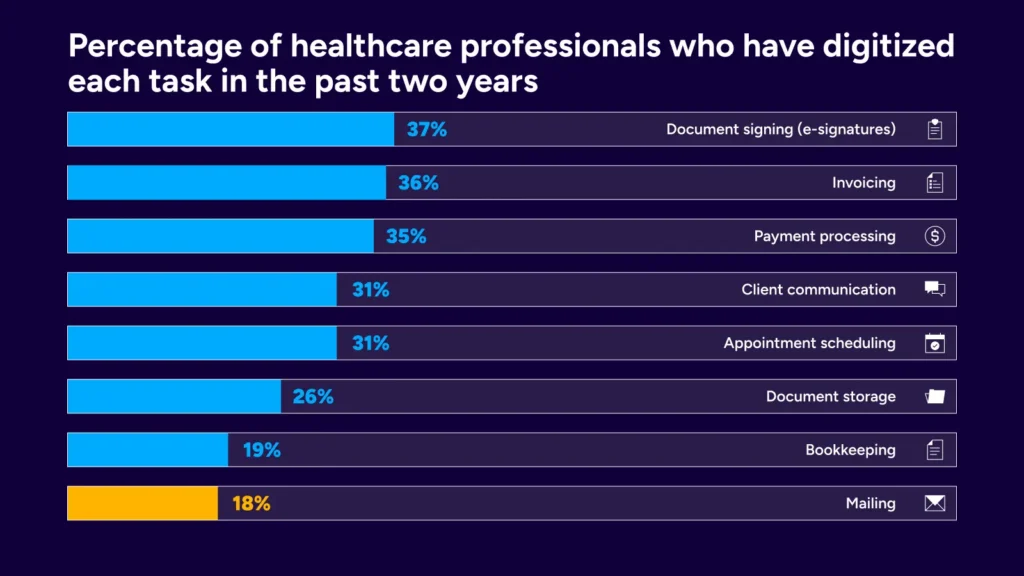
Among healthcare professionals surveyed, e-signatures (37%), invoicing (36%), and payment processing (35%) have all seen meaningful adoption in the past two years. Mailing for healthcare practices trails all of them—digitized by fewer than 1 in 5 respondents. The gap isn’t about resistance to technology. It’s about a process that hasn’t been prioritized for modernization.
Scheduling a free carrier pickup, for instance, means staff aren’t leaving the office to make a mailing trip during a clinical day—one of the most common friction points healthcare professionals cited in the survey.
If you’re ready to start closing that gap, here are five ways to streamline office mail in 2026.
When sensitive documents are in transit and something goes wrong, the stakes in healthcare are higher than in most industries. A delayed record request, a missed compliance communication, a certified letter that can’t be verified as delivered—each of these carries consequences beyond inconvenience.
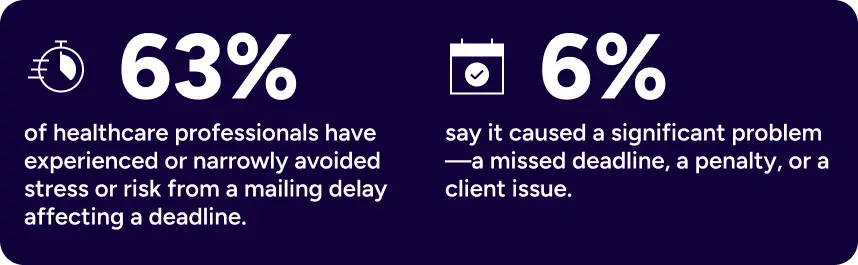
Among healthcare professionals surveyed, 63% have experienced or narrowly avoided stress or risk from a mailing delay affecting a deadline, and 6% say a delay caused a significant problem: a missed deadline, a penalty, or a client issue.
And those are only the cases that became real problems. In fact, 25% of healthcare professionals surveyed said a mailing delay had already created a close call they managed to resolve in time—which means the risk is far more common than the consequences suggest.
Healthcare practices also can’t always control when time-sensitive documents need to go out. About a third send time-sensitive documents with regulatory or legal deadlines daily or several times a week. A mailing process that depends on office hours, available staff, or a mailing trip isn’t built for that frequency.
Modernizing mailing for healthcare practices doesn’t mean moving sensitive documents to channels that don’t fit. It doesn’t mean asking patients to adapt to a process that doesn’t work for them. It means making the physical mail process more reliable, more trackable, and less dependent on time your staff doesn’t have.
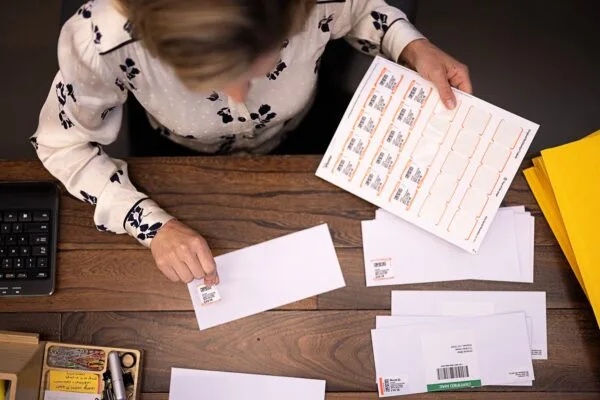
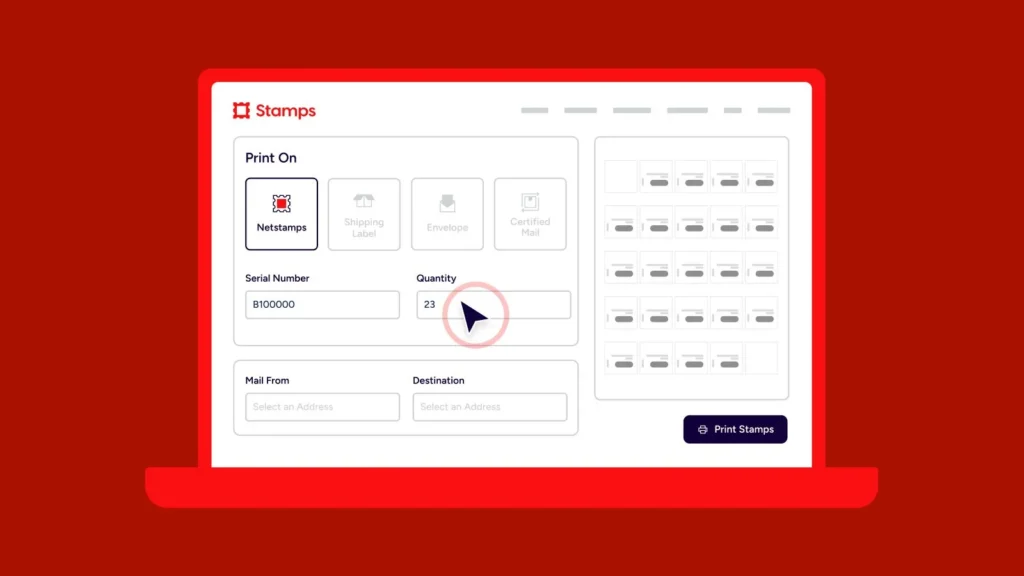
Printing postage and labels from your desk, scheduling pickups instead of making mailing trips, sending Certified Mail with delivery confirmation, and maintaining a record of every outgoing piece—these aren’t dramatic changes. But they close the gap between how seriously healthcare practices protect patient data and how that data is handled once it leaves the office.
I feel like I have an actual relationship with Stamps.com. I know I can always get a response in 24 hours. With others, I always felt like just another customer.
Adriana Hurtado, Procurement Manager, Midwest Vision Partners
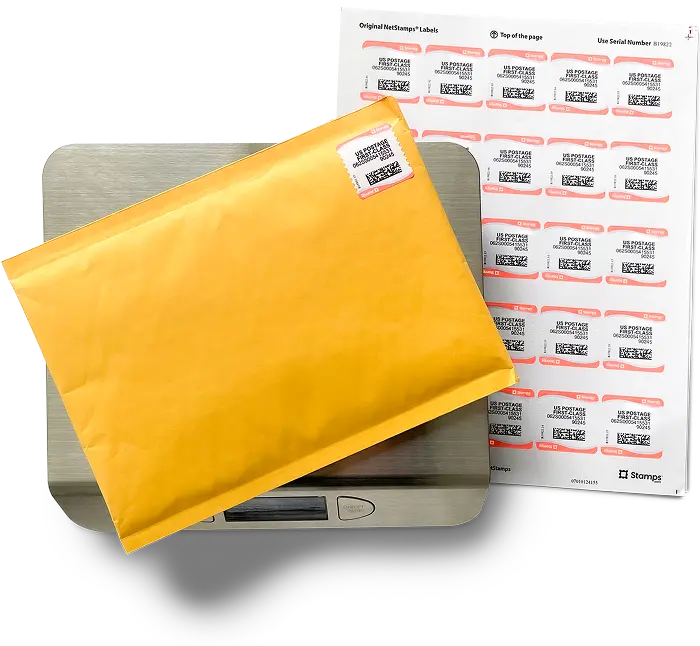
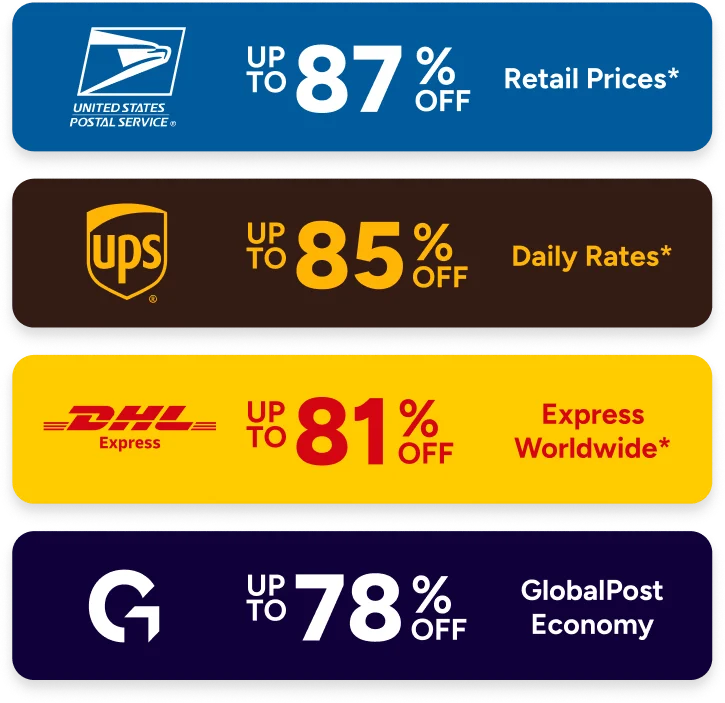
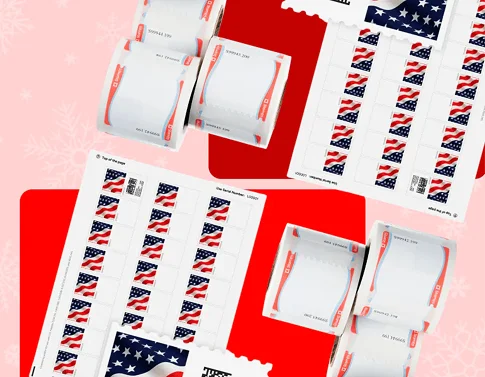
With Stamps.com, mailing for healthcare practices works on your schedule. You can print exact postage for any mail type with discounted rates from UPS, USPS, and other carriers. Send Certified Mail with tracking and proof of delivery, and keep a complete sending log for every outgoing document.
For a full look at mailing and shipping solutions available to small businesses, start here.
For practices where 52% of professionals report overpaying for postage and the majority of outgoing mail is sensitive in nature, that combination of accuracy, visibility, and reliability isn’t a convenience. It’s the standard the work deserves. The care you put into patient records shouldn’t stop at the mailbox. Start your free trial of Stamps.com.