
















Every business has documents that simply can’t be late. Court filings. IRS submissions. Signed contracts. Vendor notices. Compliance certifications. The list is longer than most people realize, and the margin for error is slim.
The good news is that mailing time-sensitive documents doesn’t have to be a source of anxiety. With the right systems in place, it becomes one of the most predictable, reliable parts of your operations. The bad news? Most businesses still rely on manual processes that introduce unnecessary risk—and they don’t realize it until something slips.
If your current approach to critical mail involves a trip to the post office and a hope for the best, this is worth reading.
Time-sensitive mail spans nearly every industry, but a few categories stand out for the stakes involved.
Legal practices send Certified Mail regularly—subpoenas, court filings, service of process, and notice requirements with hard statutory deadlines. Miss one, and a case can be jeopardized. Accounting and tax firms face the same pressure every spring: extensions, IRS correspondence, client tax documents, and state filings all carry dates that are essentially non-negotiable. Small businesses deal with vendor contracts, insurance renewals, and certified notices to employees or tenants that require documented delivery.
What these scenarios have in common is that the consequence of failure isn’t just inconvenience—it’s financial, legal, or reputational damage. When mailing time-sensitive documents, proof of delivery isn’t a nice-to-have. It’s the whole point.
Here’s something that doesn’t get said enough: the biggest threat to your deadline isn’t the mail carrier. It’s your internal process.
When sending critical documents requires someone to:
You’ve introduced five separate points of failure before the envelope leaves your hands.
Businesses that operate this way often don’t know how exposed they are until a piece of mail is sent to the wrong address, postage is calculated incorrectly and the item is returned, or a delivery confirmation never materializes because it wasn’t requested. By then, the deadline has passed.
Automating your office mail isn’t just about saving time—it’s about eliminating the gaps where mistakes happen. And in 2026, the tools to do this are accessible to businesses of any size.
The goal isn’t speed for its own sake. It’s reliability. A confident mailing workflow for time-sensitive documents has three qualities.
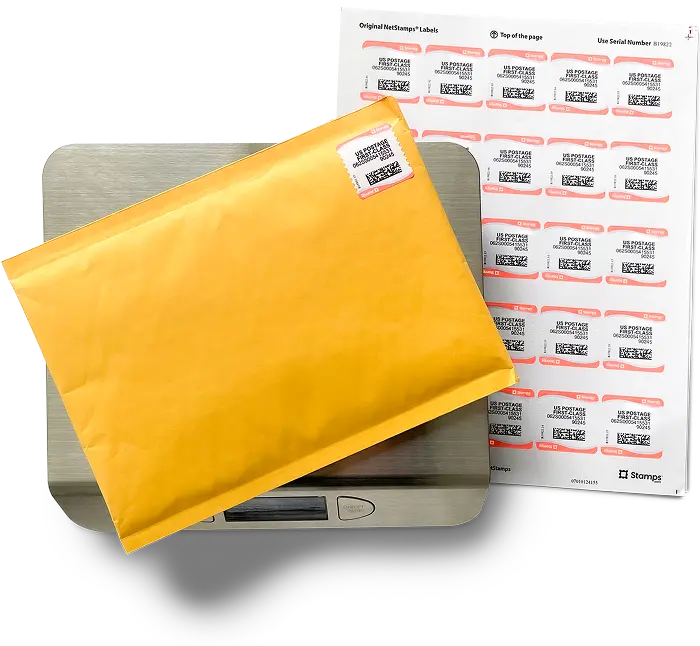
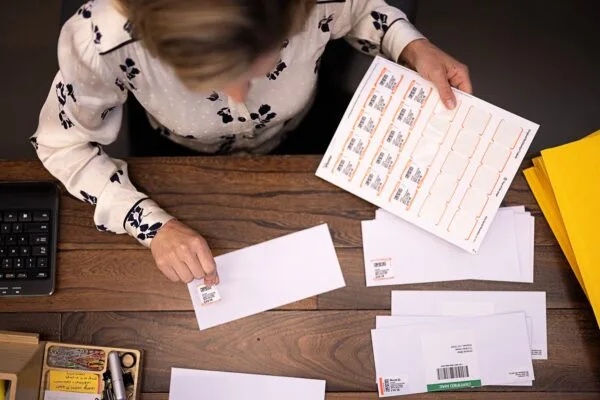
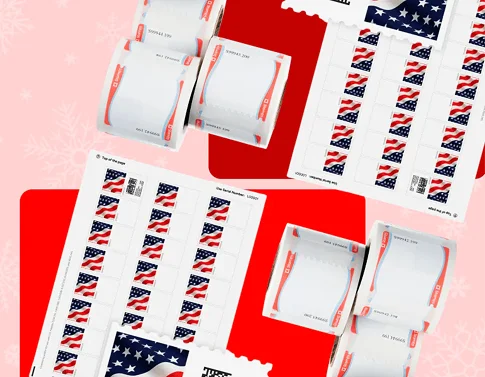
First, it’s on-demand. If a filing comes in at 3 pm and needs to go out by 5 pm, you shouldn’t need to make a trip anywhere. Printing postage directly at your desk—on envelopes, labels, or NetStamps—means you can process mail the moment a document is ready, not when it’s convenient to leave the office.
Speed. Just being able to do stuff. If I decide I want to run stamps at 6 pm, I can do that. Without Stamps, well, the post office is closed.
Gary Siano, President, Bearcat Billing Service
Second, it’s traceable. Certified Mail gives you end-to-end visibility on critical pieces: when it was scanned, when it was delivered, and who signed for it. For legal, tax, or compliance documents, that tracking record isn’t just useful—it’s often legally required. You can monitor every step of the delivery process from a centralized dashboard, so no one has to wonder whether something arrived.
Third, it’s accurate. Wrong postage means returned mail. Wrong address means undeliverable mail. Both mean missed deadlines. Address verification built into your mailing platform catches errors before they become problems. An automated postage calculator eliminates guesswork and ensures you’re never underpaying—or overpaying.
Stamps.com is built specifically for businesses that mail regularly and can’t afford to get it wrong. For mailing time-sensitive documents in particular, a few features do the heavy lifting.
Certified Mail is fully supported from your desk. No trip required. You can print the label, generate the tracking number, and schedule a free carrier pickup—all before the document is sealed in the envelope.
Address verification runs automatically, flagging potential delivery issues before you print. For high-stakes mailings, that extra check matters.
Reporting and print history give you a complete log of every piece you’ve sent. When a client or regulator asks for confirmation that something was mailed, you have the record. Billing codes let you organize that history by client, matter, or department—useful for firms that need to document postage as a reimbursable expense.
The Rate Advisor ensures you’re always using the best service for the job—whether that’s Certified Mail, USPS Ground Advantage for signature return flows, or Priority Mail when same-day turnaround is the goal. You’re not guessing at the counter; you’re making an informed decision in seconds.
For offices sending high volumes of critical mail, this level of control adds up fast. DiSchino & Schamy, PLLC, a Miami law firm that handles more than 1,000 tracked mailings a year, eliminated post office trips, paper green cards, and manual tracking errors entirely after switching to Stamps.com. The firm now saves an estimated 20 hours a month—time that goes back to client work, not logistics.
Stamps.com takes all the guesswork out. There’s huge time savings and you don’t have to worry whether someone forgot to attach the certified slip.
Christopher DiSchino, Founding Partner, DiSchino & Schamy, PLLC
There’s a broader shift happening in how businesses think about operational risk. Automation in 2026 isn’t about replacing people—it’s about removing the parts of a workflow that are most likely to fail. For mail-dependent businesses, that means building a process where every piece goes out correctly the first time, with tracking that proves it.
Mailing time-sensitive documents by hand, under pressure, on a tight clock is exactly the kind of task that benefits most from a smarter approach. Not because your team can’t handle it—but because they shouldn’t have to.
Your clients trust you to meet deadlines. Your compliance obligations don’t flex. And your business reputation is built in part on the reliability of the commitments you make.
If you’re not sure whether your current process is as tight as it should be, it’s worth taking a hard look. Our business efficiency quiz is a good place to start—it’ll help you identify where time and risk are slipping through the cracks.
When mailing time-sensitive documents is handled right, it’s invisible. No scrambles, no surprises, no missed deadlines. That’s what a good mailing system delivers—and Stamps.com is how businesses of all kinds get there.
If your business relies on reliable, trackable mail and values efficiency, Stamps.com is not optional. It is foundational.
Christopher DiSchino, Founding Partner, DiSchino & Schamy, PLLC
Ready to take control of your critical mail? Start your free 30-day trial of Stamps.com and see how much easier deadline-driven mailing can be.
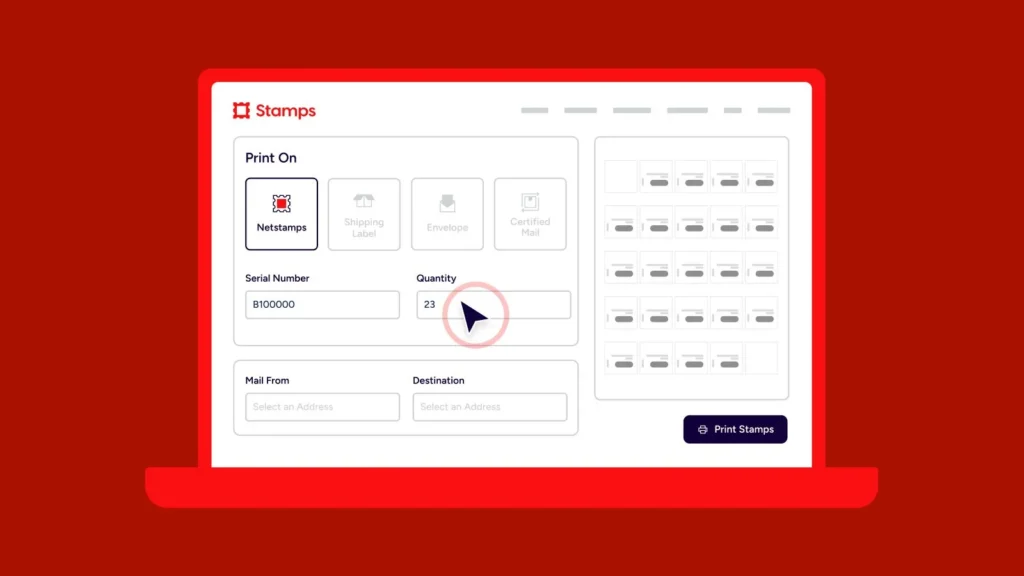
You can print NetStamps if you have a Stamps.com account with sufficient postage balance. After logging in to your account, simply select print on “NetStamps,” choose how many to print, select to print on a NetStamps sheet or roll, and click print!
Delivery is made by the country's postal service in 3 - 5 business days, depending on the destination.
Our rate advisor feature helps you calculate exact postage or shipping rate for anything you send. All you need is your item's weight and dimensions -- we do all the math for you and recommend cheapest, fastest, and best rates across all carriers.
USPS Ground Advantage delivery time is typically the slowest for domestic shipping services, taking two to five business days depending on the destination.
UPS Next Day Air offers guaranteed delivery by 10:30 a.m., 12:00 p.m., or end of day on the next business day, depending on the destination and specific service selected. Deliveries are made Monday through Friday, with Saturday delivery available in select areas for an additional fee.
Nonmachinable envelopes might be non-rectangular, rigid, unevenly thick, or have non-paper closures, meaning they cannot be processed efficiently by USPS's automated sorting equipment, and require special handling, resulting in a surcharge in addition to the standard postage.
USPS Priority Mail generally delivers in 2-3 business days. First-Class Mail, while more economical, typically takes 1-5 business days for delivery.
UPS Worldwide Saver is faster than UPS Worldwide Expedited, offering delivery by the end of the next business day to major business centers, compared to 2-5 business days for Worldwide Expedited. Worldwide Saver provides a more economical alternative to premium express services while maintaining quick delivery.
UPS Ground typically takes 1 to 5 business days for delivery with 90% of UPS® Ground packages being delivered in 3 days or less.
UPS Standard is generally faster than UPS Ground Saver, as it has a typical delivery window of 1-5 business days compared to Ground Saver's 2-7 business days.
UPS Next Day Air is significantly faster than UPS Second Day Air, delivering packages by the next business day, while UPS Second Day Air delivers within two business days. It's the fastest standard overnight service offered by UPS.
UPS Ground Saver is typically slower than UPS Standard, with delivery times ranging from 2-7 business days, whereas UPS Standard generally delivers within 1-5 business days.
UPS 3 Day Select is generally faster than UPS Ground Saver, offering guaranteed delivery within three business days, whereas Ground Saver can take 2-7 business days and has no guaranteed delivery time.
UPS 2nd Day Air is faster than UPS 3 Day Select, offering guaranteed delivery by the end of the second business day, while 3 Day Select provides guaranteed delivery by the end of the third business day.
Packages up to 15.999 ounces are priced in 4-ounce increments, while heavier packages are charged by the pound, rounded up. The further the distance, the higher the cost. Additional fees apply to oversized packages. Easily calculate discounted rates anytime at Stamps.com.
Educational materials like books, music, or videos that never include any products or advertising.
Stamps.com gives you access to all mailing and shipping services from USPS, UPS, DHL, and other top carriers. Visit stamps.com/carriers for a full list.
First-Class Mail International®
Flat Rate Envelopes are ideal for documents or small, dense items weighing 4 lbs or less, as they offer a single price based on the destination country. For items between 4 lbs and 70 lbs, or those that don't fit into the Flat Rate Envelopes, you'll need to ship by weight using your own packaging. It’s more affordable to use Flat Rate boxes if your item is under 20 lbs.